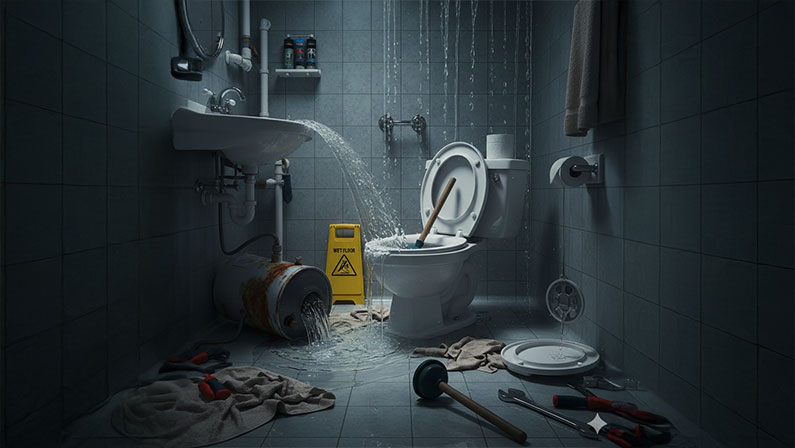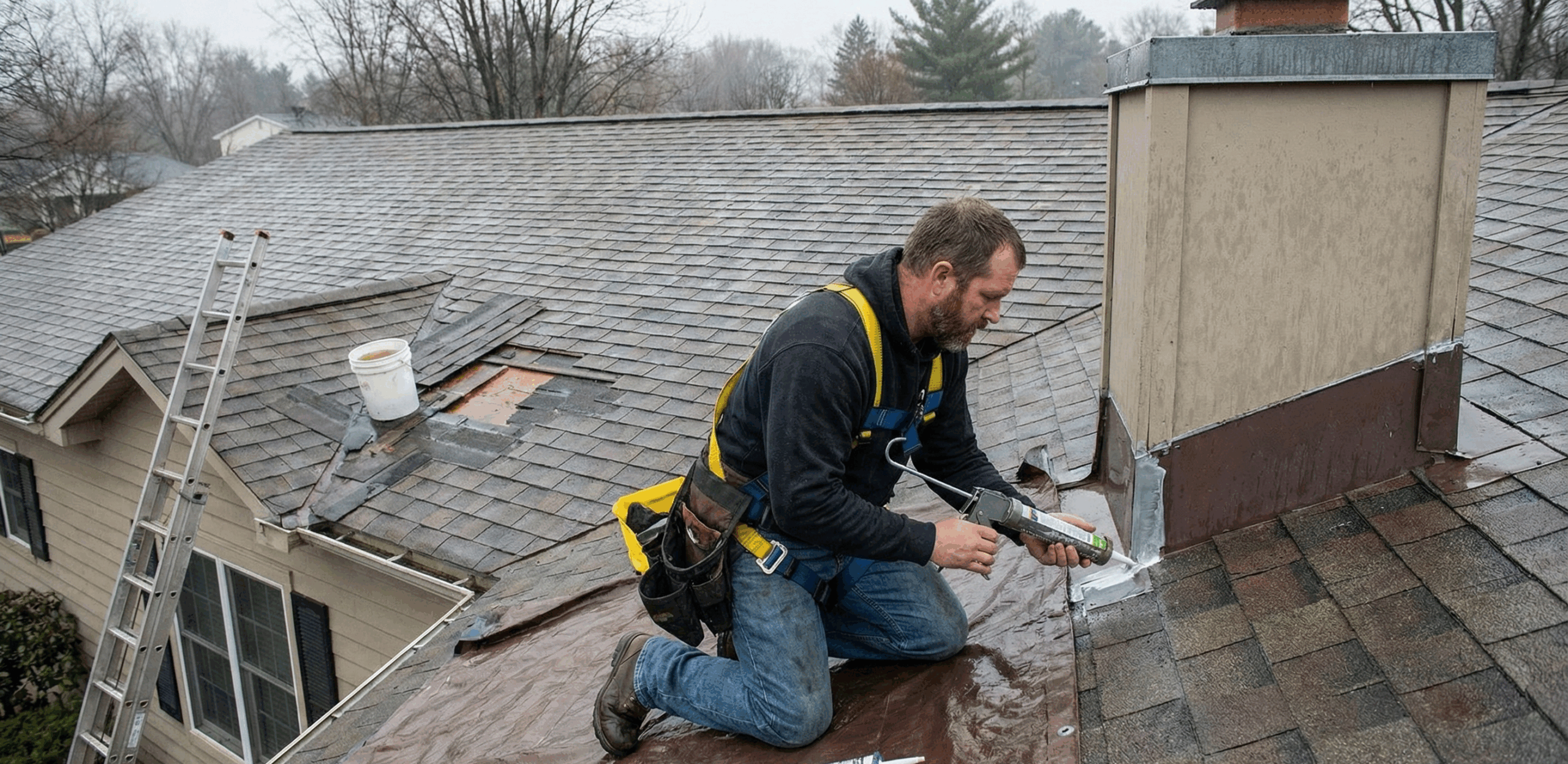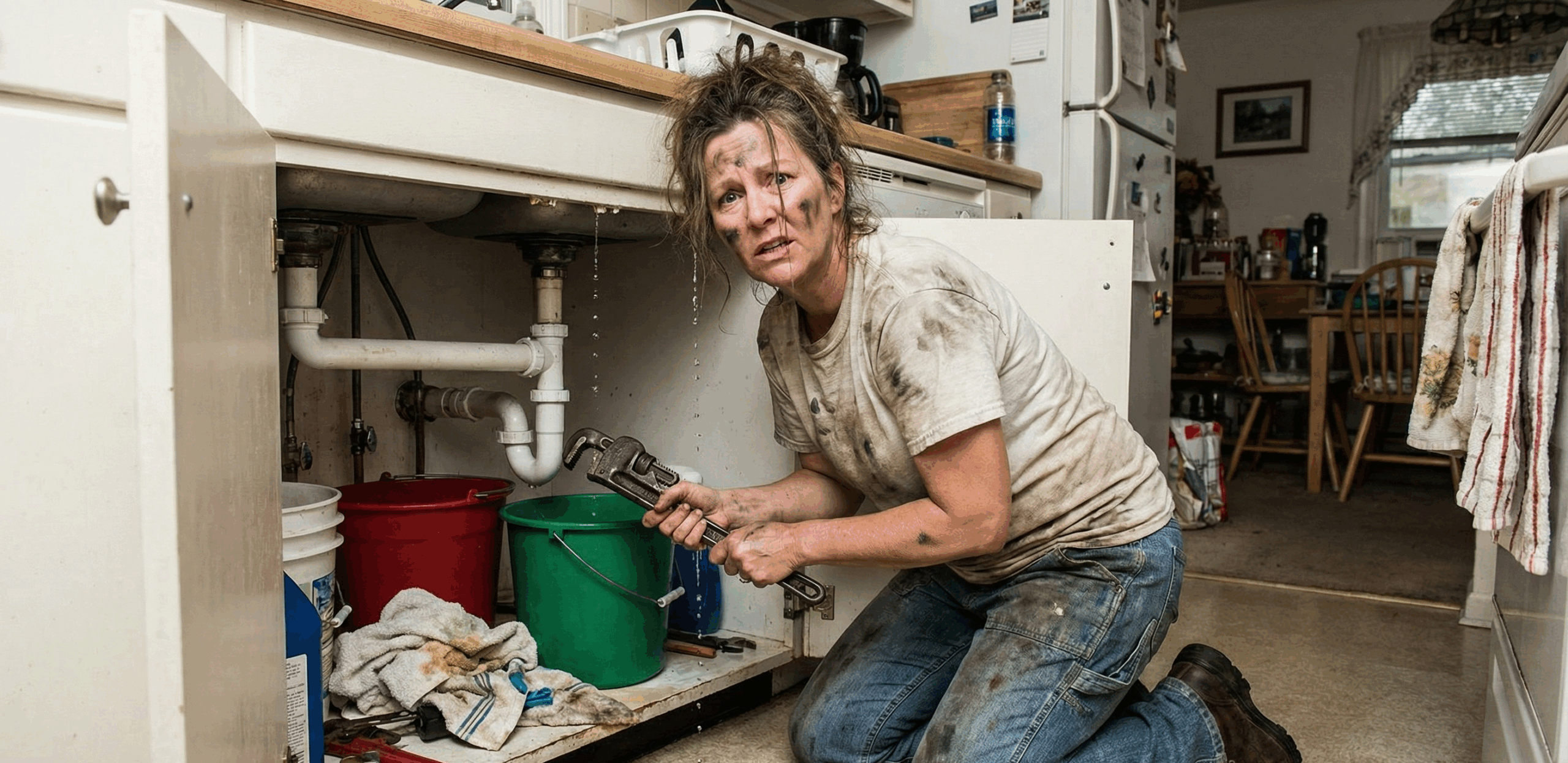

We’ve all been there. Your bathroom sink drains a bit slower than usual. You ignore it for a few days. Then it gets worse. You grab the plunger, and it seems to work. Three days later, the problem’s back, and now your shower’s draining slowly too. Before you know it, you’re standing ankle-deep in water, wondering how a minor annoyance turned into a plumbing problem.
The truth is, most homeowners try DIY solutions first. It makes sense. Why call a professional plumber when you might fix it yourself? But here’s the thing, some blockages respond perfectly to DIY methods, whilst others never will. Knowing the difference saves you time, money, and the frustration of “fixing” the same drain repeatedly.
How Drain Blockages Actually Develop
Understanding how blockages form helps you recognise when you’re dealing with a simple clog versus a serious drainage problem.
Progressive buildup represents the most common pattern. Hair combines with soap scum in bathroom drains. Cooking fats coat the kitchen pipe walls, trapping food particles. These accumulations narrow your pipes incrementally over time. You might not notice any change for months, then suddenly your sink drains more slowly than usual. That “sudden” change actually resulted from months of buildup, finally restricting flow enough to become noticeable.
Complete blockages develop in two ways. Sometimes that progressive buildup simply reaches complete obstruction. Other times, a larger object creates instant blockage. These sudden blockages usually announce themselves immediately with completely stopped drainage.
Partial blockages cause more confusion. Your drain still works, just slower than normal. Water eventually clears, so you convince yourself everything’s fine. But that partial restriction traps more debris with each use, progressively worsening until complete blockage occurs.
This is where DIY attempts often mask developing problems without actually solving them.
Melbourne’s seasonal conditions affect drainage in predictable patterns. Autumn brings leaf accumulation in outdoor drains and gutters. Winter’s wet weather tests drainage capacity. Spring growth sends tree roots seeking moisture in sewer lines. Summer storms overwhelm systems already compromised by accumulated debris.
Warning Signs You’re Dealing With Serious Blockages
Certain warning signs indicate your blocked drain involves more than a simple surface clog that DIY methods can address.
When multiple fixtures drain slowly simultaneously, you’re dealing with a main sewer line problem, not individual drain issues. If your toilet, shower, and bathroom basin all slow down together, the blockage sits in the main line serving all these fixtures. This always requires professional assessment.
Gurgling sounds from other drains when you use fixtures indicate air trapped in your drainage system. You might hear your toilet gurgle when running the bathroom tap, or notice bubbling in your shower drain when flushing the toilet. These sounds signal that your drainage system isn’t functioning properly.
Water backing up in unexpected places reveals interconnected drainage problems. When you run your washing machine and water appears in your shower, or flushing the toilet causes your bathroom basin to fill, you’ve got serious blockages in your main drainage lines.
Foul odours from drains indicate organic matter decomposing within your pipes. Fresh blockages might not smell, but established blockages that have been developing for weeks definitely will. These odours often intensify during warmer weather. If multiple drains emit odours, you’re dealing with main line blockages affecting your entire system.
Outdoor flooding or soggy patches in your yard, particularly near sewer line paths, suggest serious underground blockages or pipe damage. Water escaping from compromised sewer lines saturates the surrounding soil, creating obvious damp areas. These situations demand immediate attention to prevent property damage and potential health hazards.
Recurring blockages in the same location mean you’re treating symptoms rather than causes. If you clear a drain only to have it block again within days or weeks, something deeper in your system is creating the problem. This pattern indicates you need a professional drainage assessment, not another round of DIY attempts.
Why DIY ((Do-It-Yourself)Methods Often Fail
Understanding why common DIY approaches fail helps you avoid wasting time and potentially worsening your drainage problems. Plungers work effectively on simple clogs near drain openings. The suction and pressure help dislodge material blocking the trap or nearby pipe sections.
However, plungers can’t generate enough force to affect blockages sitting metres down your drain line. They also can’t address partial blockages caused by buildup, coating pipe walls or roots infiltrating pipes.
Chemical drain cleaners represent one of the most problematic DIY approaches. These products contain harsh chemicals designed to dissolve organic material, but they often worsen serious blockages. When chemicals can’t reach the blockage source through standing water, they simply sit in your pipes, potentially corroding materials without solving the problem. Chemical cleaners absolutely cannot address tree root intrusion, and they often damage older pipes whilst providing no actual benefit.
Household drain snakes have significant limitations. Most consumer versions extend only a few metres, nowhere near enough to reach main line blockages. They also lack the cutting power to address serious obstructions like compacted debris or root masses. You might break through a surface blockage with a household snake, only to have it reform quickly because you haven’t removed the underlying cause.
Boiling water and natural solutions like baking soda and vinegar work for minor grease buildup and light organic accumulation near drain openings. These approaches provide gentle cleaning for regular maintenance but lack the power to address established blockages. They’re preventive measures, not solutions for serious drainage problems.
The fundamental limitation of DIY methods is that they address surface symptoms without identifying root causes. You might temporarily clear water flow, but if tree roots, pipe damage, or main line issues caused the blockage, your DIY success will be short-lived. Meanwhile, the underlying problem continues to develop, often leading to more serious failures requiring emergency intervention.
DIY attempts can actually create additional problems. Excessive plunger force can damage wax seals on toilets. Chemical cleaners can corrode pipes. Aggressive drain snake use can scratch or puncture pipes. These self-inflicted problems add to your original blockage issues.
When Tree Roots Take Over Your Pipes
Tree root intrusion represents one of the most serious causes of blocked drains, and it’s completely beyond DIY repair capabilities. Tree roots enter drainage pipes through small cracks, joint separations, or any tiny opening that allows moisture to escape.
Once inside, roots expand rapidly in the nutrient-rich, moisture-abundant environment your sewer line provides. They spread throughout pipe sections, creating dense masses that trap debris and progressively restrict flow.
Signs of root intrusion include recurring blockages, slow drainage that worsens over time, gurgling sounds, and blockages that temporarily clear but quickly return. Root problems also follow seasonal patterns. Spring growth accelerates root expansion, often triggering blockages during this season.
Root intrusion requires professional intervention with specialised equipment. Powered augers feature cutting heads designed specifically for removing root masses from pipes. Following root removal, a professional assessment determines whether pipe damage requires repair or if preventive treatments can slow future root growth.
Tree root problems demonstrate why DIY approaches fail with serious blockages. No household tool can cut through established root masses or address the pipe vulnerabilities that initially allowed infiltration.
Understanding Multiple Fixture Backup
When your toilet, shower, and basin all drain slowly or back up simultaneously, you’re experiencing a main sewer line blockage. This situation always demands a professional plumber’s assessment.
Main sewer lines collect waste from all your home’s fixtures and transport it to municipal sewers or septic systems. When this main line becomes blocked, waste has nowhere to go. It backs up through your fixtures, typically appearing first at the lowest points in your home.
These situations create immediate health hazards. Sewage backing into your home exposes your family to dangerous bacteria and viruses. The contamination affects not just the backed-up fixtures but also the surrounding surfaces.
If you experience multiple fixture backups, take immediate steps before calling for emergency help. Stop using all the water in your home to prevent additional backup. Don’t attempt to clear the blockage yourself, as sewage exposure creates serious health risks.
Don’t flush toilets or run taps, as this adds water to an already critical situation. Contact emergency drainage plumbers immediately when you experience multiple fixture backups. This situation will not resolve itself and will only worsen with time.
Professional Equipment & Expertise Makes The Real Difference
The gap between DIY tools and professional equipment and expertise explains why serious blockages require expert intervention.
High-pressure water jetting represents the most effective drain clearing technology. These systems use pressurised water to thoroughly clean pipes. The powerful water stream removes built-up grease, cuts through roots, and scours pipe walls clean. This approach solves the problem comprehensively rather than just temporarily clearing the flow.
CCTV camera inspection provides diagnostic capabilities impossible with DIY approaches. Professional drainage plumbers insert specialised cameras into your drains, revealing exact blockage locations, identifying pipe damage, and showing root intrusion extent. This visual assessment guides appropriate repair strategies.
Specialised root cutting equipment removes tree roots that household snakes can’t touch. These powered augers feature cutting heads designed specifically for root masses. Following cutting, high-pressure jetting removes debris and confirms thorough cleaning.
Professional diagnostic tools identify problems beyond obvious blockages. Electronic locating equipment pinpoints exact blockage positions, even metres underground. This precision targeting means efficient repairs without unnecessary excavation.
The combination of proper equipment, professional expertise, and a comprehensive approach explains why serious blockages demand expert intervention. You’re not just paying for equipment access but for knowledge about which tools suit specific situations. You can learn more about our plumbing services here.
Don’t Wait For Complete System Failure
Blocked drains follow a predictable progression from minor inconvenience to serious emergency. Recognising warning signs and acting promptly prevents the worst outcomes whilst keeping intervention straightforward.
If you’re experiencing recurring blockages, multiple slow drains, unusual sounds or odours, or any other warning signs, professional assessment now prevents emergency situations later. Waiting until complete failure occurs means dealing with sewage backup, property damage, potential health hazards, and emergency service requirements.
Regular plumbing maintenance catches these developing problems early. Annual drain inspections identify buildups before they cause blockages, whilst CCTV assessments reveal tree root intrusion in early stages when treatment remains straightforward.
At Prorec Plumbing, we provide comprehensive plumbing services throughout Melbourne. Our experienced team uses advanced equipment, including high-pressure water jetting, drain snakes and CCTV inspection, to identify and resolve drainage problems effectively.
If you need help with blocked drains, drainage problems, or want a professional assessment of recurring issues, Give us a call at 0421 411 146 or leave your details here so we can get in touch with you. Our team of drain experts is available 24/7, fully equipped to address any drain issues promptly.
Professional drainage assessment identifies problems, whilst solutions remain straightforward. Don’t wait for the emergency that DIY methods can’t prevent.